
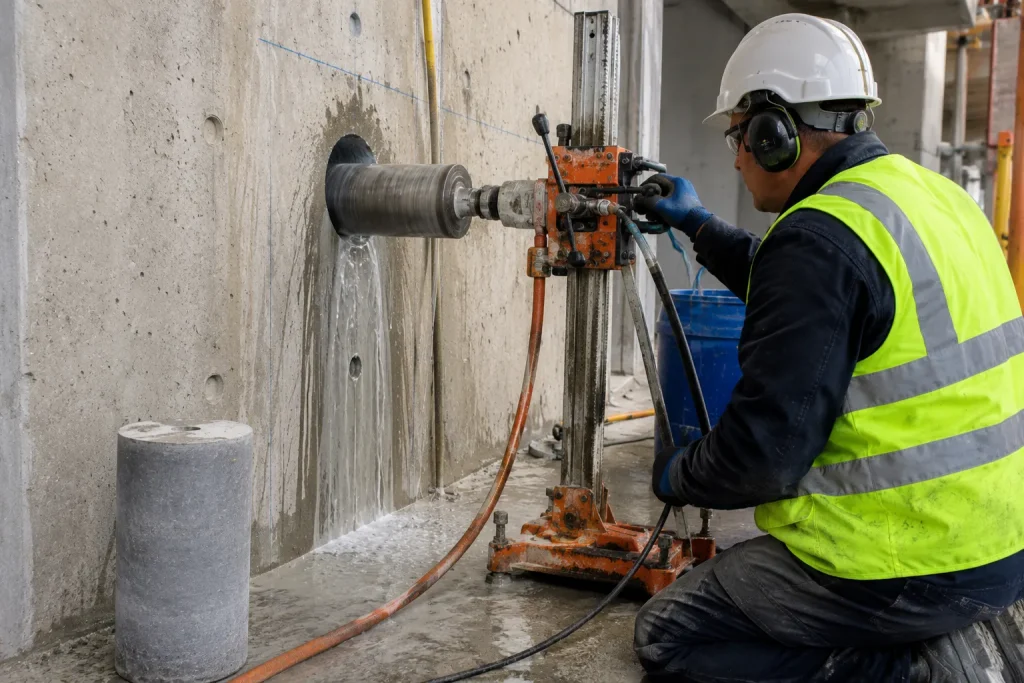
Introduction
Core Drilling plays a critical role in modern utility and pipeline installations. As infrastructure projects become more complex, contractors need precise methods to create openings through concrete, masonry, asphalt, and other dense materials. Core drilling provides that accuracy while minimizing structural damage. According to industry construction reports, utility and pipeline projects account for more than 35% of underground infrastructure work in North America, making precision drilling a key requirement.
Unlike traditional breaking methods, Core Drilling removes a clean cylindrical section of material. This process creates accurate openings for water lines, gas pipelines, electrical conduits, telecommunications cables, and sewer systems. The technique reduces vibration, lowers noise levels, and protects surrounding structures.
From our experience on utility projects, precision often determines project success. A misplaced opening can delay installation schedules and increase repair costs. Professional contractors rely on core drilling because it delivers exact dimensions and predictable results. Whether installing a 2-inch conduit or a 24-inch pipeline sleeve, core drilling ensures safe and efficient access through concrete structures. As infrastructure demands continue growing in 2026, this specialized drilling method remains one of the most valuable tools in utility construction.
How Core Drilling Supports Utility Infrastructure Projects
Precision Openings for Critical Services
Core Drilling enables contractors to create exact openings for utility systems without compromising structural integrity. Modern diamond core drills can produce holes ranging from 0.5 inches to 60 inches in diameter. This versatility allows installation teams to accommodate various utility requirements.
Utility networks depend on accurate placement. Water mains, electrical conduits, fiber-optic cables, and gas lines require carefully measured entry points. Even a deviation of one inch can create alignment issues across long pipeline runs. Core drilling eliminates much of this risk.
Key utility applications include:
- Water supply pipe installations.
- Electrical conduit routing.
- Fiber-optic network deployment.
- Stormwater drainage systems.
- Sewer infrastructure upgrades.
- Natural gas pipeline connections.
The clean-cut results reduce repair work and help projects stay within schedule. Many contractors report installation efficiency improvements of up to 25% when using diamond core drilling instead of impact-based methods.
Benefits of Core Drilling for Pipeline Installations
Protecting Structural Integrity During Construction
Core Drilling is essential for pipeline projects because it minimizes stress on surrounding structures. Traditional jackhammering generates vibrations that can cause cracks in concrete slabs and walls. Diamond core drilling avoids these issues by grinding through material instead of breaking it apart.
For utility tunnels and underground facilities, maintaining structural stability is critical. Engineers often specify core drilling when pipelines pass through retaining walls, foundations, and reinforced concrete structures. The method preserves reinforcement bars whenever possible and limits collateral damage.
| Installation Method | Average Accuracy | Vibration Level | Surface Damage Risk |
|---|---|---|---|
| Diamond Core Drilling | ±2 mm | Very Low | Minimal |
| Jackhammering | ±25 mm | High | High |
| Percussion Drilling | ±10 mm | Moderate | Moderate |
Industry data shows that repair costs from unintended structural damage can exceed $5,000 per incident. Core drilling significantly reduces these risks and improves project reliability.
Advanced Technology Behind Modern Core Drilling
Diamond Drilling Equipment and Performance
Modern Core Drilling equipment uses diamond-tipped drill bits engineered for extreme durability. Industrial diamonds provide exceptional cutting performance when penetrating reinforced concrete, stone, and asphalt. Water-fed systems cool the drill bit and control dust generation throughout the process.
Professional drilling rigs can achieve drilling depths exceeding 20 feet while maintaining precise alignment. Advanced guidance systems help operators maintain drilling angles and avoid utility conflicts. This level of control is especially valuable during large-scale pipeline installations.
Recent equipment advancements include:
- Digital depth monitoring systems.
- Automatic feed-rate controls.
- Remote operation capabilities.
- Dust suppression technology.
- High-torque electric motors.
Construction specialists consistently recommend diamond core drilling for utility work because of its precision and reliability. In many municipal projects, engineers now specify core drilling as the preferred method for creating service penetrations through concrete structures. Explore our solutions for Building Bridges and Tunnels Underwater.
Safety and Efficiency Advantages of Core Drilling
Faster Project Completion and Reduced Risks
Core Drilling improves both workplace safety and project efficiency. The controlled drilling process produces less airborne dust than demolition methods. Reduced vibration also lowers operator fatigue and enhances working conditions on construction sites.
Safety statistics from construction industry studies show that controlled drilling methods contribute to lower incident rates compared with aggressive concrete removal techniques. The precision of core drilling also reduces the likelihood of striking adjacent infrastructure.
Additional advantages include:
- Faster installation timelines.
- Lower noise levels.
- Reduced material waste.
- Improved worker safety.
- Cleaner job sites.
- Better environmental compliance.
From an operational perspective, utility contractors often complete drilling tasks in hours rather than days. This efficiency keeps pipeline installation schedules on track and minimizes disruptions to surrounding communities.
Conclusion
Core Drilling remains an essential process for utility and pipeline installations because it combines precision, safety, and efficiency. The method creates accurate openings while protecting surrounding structures from unnecessary damage. Modern diamond drilling technology allows contractors to install water lines, gas pipelines, electrical conduits, and communication networks with exceptional accuracy.
As infrastructure projects continue expanding across North America in 2026, demand for reliable drilling solutions will keep growing. Core drilling helps contractors meet strict engineering standards, reduce project risks, and improve installation quality. For utility and pipeline work, it delivers the precision needed to support long-lasting infrastructure systems while maintaining construction efficiency and safety.