
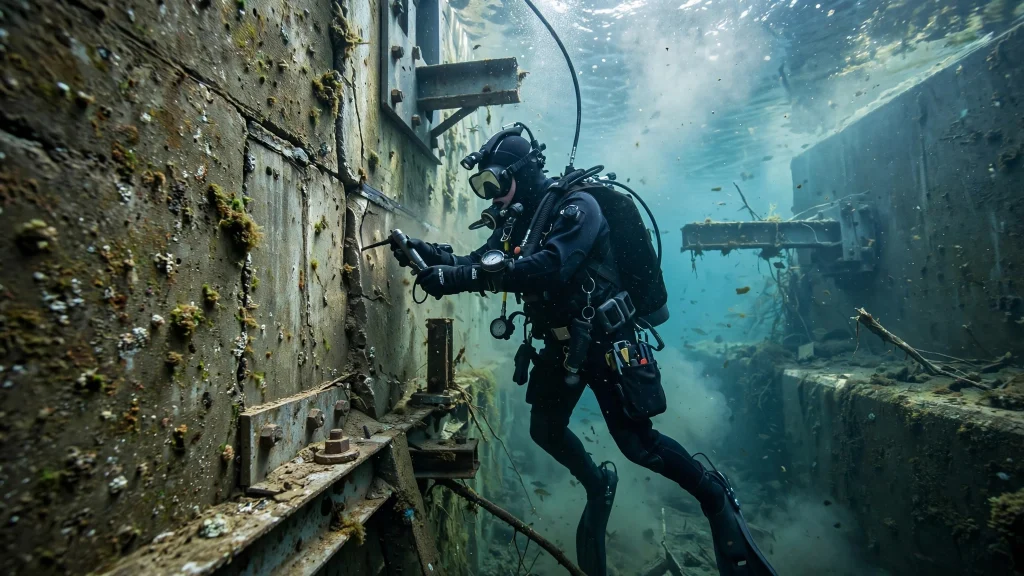
Dam Maintenance protects critical infrastructure that supplies drinking water, irrigation, hydropower, and flood control. Even minor underwater defects can grow into expensive structural failures without timely inspections. Professional divers provide direct access to submerged components that cannot be evaluated from the surface, helping operators detect problems early and reduce repair costs.
Across the United States, thousands of dams require regular inspections to meet safety standards and maintain reliable performance. Professional diving teams combine specialized equipment, engineering knowledge, and underwater inspection methods to assess concrete, steel, intake structures, and sediment conditions. Their work supports safer operations, extends asset life, and minimizes costly downtime through accurate underwater assessments.
Why Underwater Inspections Matter in Dam Maintenance
Professional diving plays a central role in Dam Maintenance because many critical components remain permanently underwater. Surface inspections cannot identify hidden cracks, corrosion, erosion, or debris that may affect structural integrity. Divers perform close visual examinations and collect detailed field data for engineers.
Regular underwater inspections deliver several benefits:
- Detect cracks before they expand.
- Identify corrosion on steel structures.
- Remove debris blocking water flow.
- Assess sediment buildup.
- Verify previous repair quality.
- Improve long-term maintenance planning.
These inspections reduce uncertainty and provide accurate information that supports informed engineering decisions.
Key Areas Divers Inspect
Professional divers typically evaluate:
| Dam Component | Inspection Purpose | Common Issues Found |
|---|---|---|
| Intake structures | Ensure proper water flow | Debris, corrosion |
| Spillways | Verify structural condition | Cracking, erosion |
| Concrete walls | Check surface integrity | Spalling, fractures |
| Gates and valves | Confirm operational reliability | Rust, mechanical wear |
| Foundation areas | Detect scour and erosion | Sediment movement |
| Trash racks | Maintain water intake efficiency | Blockages, damage |
How Professional Divers Improve Structural Safety
Structural safety remains the highest priority in Dam Maintenance. Professional divers inspect areas that remotely operated vehicles cannot always access effectively. Their direct observations help engineers understand actual underwater conditions instead of relying only on images.
Experienced commercial divers document defects using underwater photography, video recording, measurements, and detailed inspection reports. Many projects also include ultrasonic thickness testing and non-destructive evaluation methods. These techniques identify material deterioration before failures occur, allowing maintenance teams to schedule repairs during planned shutdowns rather than emergency situations.
Expert Evaluation Supports Better Decisions
Certified diving teams often work alongside structural engineers, hydrologists, and asset managers. Their combined expertise creates more reliable maintenance strategies based on verified underwater findings. This collaborative approach reduces unnecessary repairs while ensuring genuine risks receive immediate attention.
Professional Diving Supports Cost-Effective Dam Maintenance
Preventive Dam Maintenance costs significantly less than emergency reconstruction. Early detection allows facility owners to repair localized defects before they spread throughout the structure. Professional diving helps identify maintenance priorities using real inspection data instead of assumptions.
Several economic advantages include:
- Lower emergency repair costs.
- Reduced equipment downtime.
- Longer infrastructure lifespan.
- Improved maintenance scheduling.
- Better budgeting accuracy.
- Reduced operational disruptions.
Organizations investing in regular underwater inspections generally experience fewer unexpected shutdowns because maintenance becomes proactive rather than reactive.
Real-World Industry Experience
Commercial diving contractors frequently report discovering hidden voids beneath concrete structures, damaged gate seals, and severe corrosion during routine inspections. Many of these issues showed no visible surface signs. Early intervention prevented larger structural repairs and helped facilities maintain continuous operations without extended service interruptions.
Advanced Technology Enhances Underwater Inspections
Modern Dam Maintenance combines professional diving with advanced underwater technology. Divers use high-definition cameras, sonar imaging, underwater drones, laser measurement tools, and ultrasonic testing equipment to gather comprehensive inspection data. These technologies improve inspection accuracy while supporting engineering analysis.
Digital inspection reports now include mapped defect locations, photographic evidence, video documentation, and precise measurements. This information creates historical maintenance records that allow operators to compare structural conditions over time and identify deterioration trends before they become critical.
Professional Certification Matters
Qualified commercial divers receive specialized training in confined spaces, underwater construction, inspection techniques, and safety procedures. Industry certifications ensure inspection work follows recognized standards while minimizing operational risks. Experienced diving teams also understand hydraulic hazards, low-visibility environments, and emergency response procedures unique to dam infrastructure. Explore our latest insights in Why Core Drilling Is Essential for Utility and Pipeline Installations?
Environmental Benefits of Professional Diving
Effective Dam Maintenance also protects surrounding ecosystems. Dam infrastructure influences water quality, fish habitats, sediment transport, and downstream environments. Professional divers identify environmental concerns before they develop into larger ecological problems.
Divers inspect sediment accumulation, aquatic vegetation growth, invasive species, and underwater debris. Their findings help operators maintain healthy water circulation while supporting environmental compliance. Routine underwater cleaning also prevents blockages that could reduce operational efficiency or negatively affect aquatic ecosystems.
Supporting Regulatory Compliance
Federal and state agencies require dam owners to conduct regular inspections based on risk classifications and operational requirements. Professional diving provides documented evidence supporting inspection programs and maintenance records. Comprehensive reports demonstrate responsible infrastructure management while helping owners meet regulatory expectations and improve long-term asset reliability.
Conclusion
Professional diving strengthens Dam Maintenance by providing direct underwater inspections, accurate structural assessments, and reliable maintenance data. Early defect detection improves safety, reduces repair costs, and extends infrastructure lifespan. Combining experienced divers with modern inspection technology ensures dams remain dependable, efficient, and prepared to serve communities safely for decades.